
Director's Message
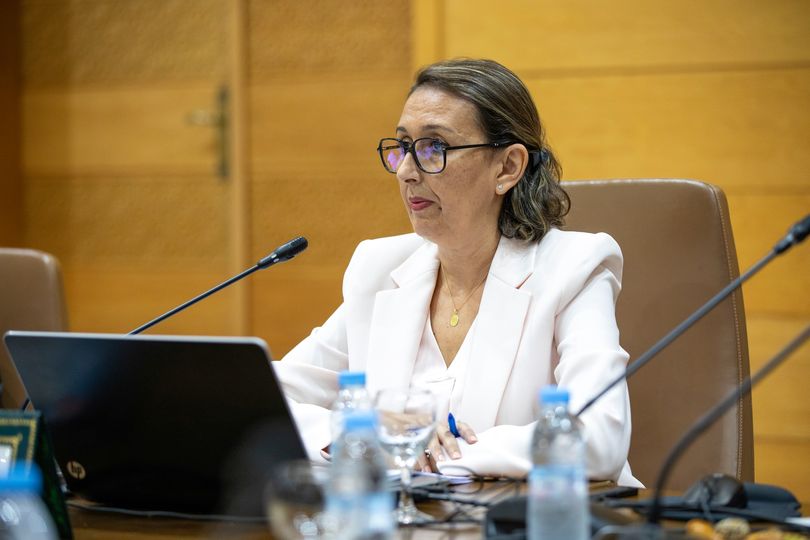
An opening message on territorial challenges, modernization of services, and close relations with citizens, users, and partners of the Agency.
The Urban Agency of Tangier, like all Urban Agencies of the Kingdom, is called upon to meet current and future challenges related to the territory and to support ongoing structural reforms by implementing the Advanced Regionalization project, the Deconcentration process, and the New Development Model of Morocco, launched by His Majesty King Mohammed VI, may God protect and glorify him. It is therefore called upon, on the one hand, to mark the transition towards a territorial repositioning at the level of the Tangier-Tétouan-Al Hoceima region and to turn towards new professions focused on strategic planning, foresight, resilience, and digital transformation.
On the other hand, it must adopt innovative managerial governance based on new technologies, information systems, reporting, diagnosis, and evaluation through relevant monitoring and performance indicators.
Thus, aware of the growing importance of New Information and Communication Technologies and fully aligned with the major national digital administration project "Morocco Digital 2020" aimed primarily at accelerating digital transformation in the country, our institution is committed to modernizing all of its services and offerings and improving their quality in order to meet the requirements of its users, respond to the expectations of its partners, and ensure the speed and transparency of its various procedures and processes.
In this context, and with a view to implementing the provisions of Law No. 31.13 relating to the right of access to information, one of the actions undertaken by the Urban Agency of Tangier during the previous year consisted of a comprehensive overhaul of its website, which is intended to be a transparent, efficient, high-performing, attractive, modern and accessible communication tool for its users. Furthermore, this portal aims to contribute positively to improving the business climate and encouraging investment, through the establishment of dematerialized digital platforms and online e-services essentially related to the Urban Agency's core business.
In conclusion, given the important role that our Urban Agency occupies at the heart of the regional and local institutional landscape, and in order to consolidate its role as a principal actor in the field of urban planning, it continues to make the necessary efforts to develop its expertise and go beyond its objectives, while ensuring the adoption of a participatory approach and a strategy of proximity and openness in addressing the concerns of Citizens, Users, and Territorial Authorities.
Definition
The Urban Agency of Tangier is a public institution endowed with legal personality and financial autonomy, whose territorial jurisdiction comprises the Prefecture of Tangier-Asilah and the Province of Fahs-Anjra.
It is placed under the supervision of the Ministry of National Spatial Planning, Urban Planning, Housing and Urban Policy, as well as that of the Ministry of Economy and Finance.
The Urban Agency of Tangier is administered by a Board of Directors that may convene twice a year. Chaired by the governmental authority in charge of urban planning, this board is composed of representatives of the State, Local Authorities and Elected Officials, and Professional Chambers. It operates in accordance with the provisions of Article 5 of Decree No. 2-93-67 of 21 September 1993 issued for the application of the Dahir bearing Law No. 1-93-51 establishing the Urban Agencies.
Reference Texts (Attachments)
- Dahir bearing Law No. 1-93-51 of 22 Rabia I 1414 (10 September 1993) establishing the Urban Agencies
- Decree No. 2-93-67 of 4 Rabia II 1414 (21 September 1993) issued for the application of the Dahir bearing Law No. 1-93-51 establishing the Urban Agencies
- Decree No. 2-94-334 of 18 Chaabane 1415 (20 January 1995) relating to the Urban Agency of Tangier
- Decree No. 2-17-634 of 18 Joumada II 1439 (28 February 2018) relating to the territorial jurisdictions of the Urban Agencies
Missions and Responsibilities
The legal missions of the Urban Agencies can be summarized into 4 groups:
- A mission of planning and study
- A mission of management and control
- A mission of assistance and support
- A mission of development and rehabilitation
Thus, in accordance with Article 3 of the Dahir bearing Law No. 1-93-51 of 22 Rabia I 1414 (10 September 1993) establishing the Urban Agencies (B.O. No. 4220 of 15 September 1993), the Urban Agency of Tangier is responsible, within the territorial limits of its jurisdiction, for:
- Carrying out the studies necessary for the establishment of the Master Plans for Urban Development and monitoring the implementation of the orientations defined therein
- Programming the development projects inherent to the achievement of the objectives of the Master Plans
- Preparing the draft regulatory urban planning documents, in particular the Zoning Plans, the Development Plans and the Growth Plans
- Issuing a binding opinion within a maximum period of 1 month on all projects of subdivisions, housing groups, parcelling and constructions, which must be submitted to it for this purpose by the competent authorities
- Monitoring the conformity of subdivisions, parcelling, housing groups and constructions under realization with the legislative and regulatory provisions in force and with the authorizations granted to subdivide, parcel, create housing groups or build
- Carrying out the studies for development projects of specific sectors and executing all municipal works or development projects on behalf of the State, local authorities, or any other public or private person who so requests, when the project is of public utility
- Promoting and carrying out operations of urban rehabilitation, real estate renovation and restructuring of neighbourhoods lacking infrastructure facilities, and to this end, conducting the studies and acquiring the properties necessary for these operations
- Taking holdings in any enterprise whose activity corresponds to the objectives and missions assigned to it
- Promoting, with the assistance of the elected bodies concerned, the formation and development of groupings of owners by providing them with the necessary frameworks in order to facilitate the implementation of urban planning documents, and in particular, fostering the creation of union associations in application of the legislation in force in this matter and ensuring the follow-up of the operations carried out by the said associations in coordination with the aforementioned communal councils
- Providing its technical assistance to local authorities in matters of urban planning and development, as well as to public and private operators who so request in their development actions
- Collecting and disseminating all information relating to the urban development of the prefectures and/or provinces located within the territorial jurisdiction of the agency.
Territorial Jurisdiction
Geographical Location
Located in the north-west of the country, the territorial jurisdiction of the Urban Agency of Tangier is bounded:
- To the north by the Strait of Gibraltar and the Mediterranean Sea
- To the south by the Province of Larache
- To the east by the Province of Tétouan
- To the west by the Atlantic Ocean
Administrative Division
The Prefecture of Tanger-Assilah:
- 3 urban municipalities (Tangier, Assilah and Gzenaya)
- 4 urban districts (Médina, Charf-Souani, Charf-Mghogha and Bni Makada)
- 9 rural municipalities (Hjar Nhal, Dar Chaoui, Manzla, Aouama, Sebt Azzinate, Aquouass Briech, Had Al Gharbia, Sahel Chamali and Sidi Yamani)
The Province of Fahs-Anjra:
- 7 rural municipalities (Al Bahraouyine, Ksar-Sghir, Melloussa, Anjra, Jouamaa, Ksar El Majaz and Taghramt)
General Data (2014 General Census)
| Area | 172,311 Ha |
| Total Population | 1,142,048 inhab. |
| Urban Population | 1,002,700 inhab. |
| Urbanization Rate | 94% |
| Number of Households | 283,561 |
| Agricultural Area | 886,355 Ha |
| Active Population | 502,501 |
Specificities, Characteristics and Assets
Prefecture of Tanger-Assilah
- A privileged location at the northern tip of the country overlooking the Atlantic Ocean and the Strait of Gibraltar
- As the driving force of the industrial development of the Northern region, the prefecture of Tanger-Assilah is among the top three industrial hubs of Morocco, given that it hosts the largest free zone at the national level with international renown: Tanger Free Zone, with a land base of 450 Ha, over 60,000 jobs created, over 500 established companies and 7 billion MAD of investments carried out
- This territory is characterized by a very high urbanization rate (93.6%) and a sustained urban dynamic. Thus, new urban zones are being created or are under creation to curb urban pressure and the growth of the city: New town of Chrafate (Fahs-Anjra): 1,300 Ha; Al Irfane (Tanger-Assilah): 60 Ha; Ksar Sghir (Tanger-Assilah): 30 Ha; Ibn Batouta (Tanger-Assilah): 136 Ha
- The prefecture of Tanger-Assilah, which includes the cities of Tangier and Assilah, also has a remarkable cultural, historical and heritage influence
- The privileged location of the prefecture, its diversified relief combining beaches and forests, as well as its climate and its rootedness in history, are all assets that predispose it to occupy a favourite place as a tourist destination
Province of Fahs-Anjra
- Located partly on the western Mediterranean side of Morocco, the province of Fahs-Anjra is a predominantly rural province. It mainly brings together the rural municipalities facing the Strait of Gibraltar
- This province has seen the creation of the New Town of Chrafate and major industrial zones that should foster the urbanization of the area
- This territory today constitutes a central hub of activity at the heart of the Strait, hosting the port of Tanger-Med since 2007 and its exclusive development zone, major industrial activity zones (Mellousa) and the New Town of Chrafate built to accommodate nearly 150,000 inhabitants
- The province has remarkable landscapes, particularly facing the Strait (Ksar Sghir area)
Human Resources
The Urban Agency of Tangier is organized according to a structured organizational chart. The Directorate is held by Ms. Mahassine BARACA, Director of the Urban Agency of Tangier.
Human resources of the Urban Agency of Tangier by profile — situation as of 31/12/2024. The Urban Agency of Tangier has a workforce of 70 employees whose profiles are distributed as follows:
| Profile | Headcount | % | Profile | Headcount | % |
|---|---|---|---|---|---|
| Architect | 11 | 16,00% | Architecture Technician | 1 | 1,00% |
| Topographic Engineer | 1 | 1,00% | Topography Technician | 1 | 1,00% |
| Jurist | 13 | 19,00% | IT Technician | 1 | 1,00% |
| Economist and Manager | 6 | 10,00% | Accounting Technician | 1 | 1,00% |
| Specialized Officer in Architecture or Topography | 14 | 20,00% | Secretary | 1 | 1,00% |
| Other Specialty | 14 | 20,00% | Driver | 4 | 6,00% |
| Agent | 3 | 4,00% | |||
| Total | 59 | 86,00% | 11 | 14,00% | |
| Grand Total | 70 (100%) | ||||
Our Values
Code of Ethics of the Urban Agencies
This charter aims to define and formalise the fundamental values to be shared by all Urban Agencies, thereby constituting a common reference framework for these institutions and all their partners. Let us bring forth the natural ethics that each of us carries and translate it into the exercise of our professional acts.
Hereby, we adhere to the values of good governance, of valuing the public administration, of respect for the citizen and for professional ethics, and we undertake to:
Respecting legality
By carrying out our activities and professions with professionalism, involving vigilance, rigour and professional conscience, and this in strict compliance with the laws and regulations in force, without any discrimination.
Ensuring respect for the fundamental values of the supervising ministry
By fully adhering to its values and actively contributing to its ethical objectives in order to guarantee a better quality of public service.
Working towards the moralisation of the public service and promoting the culture of integrity
By refraining from taking part in illegal activities or engaging in dishonourable actions, respecting the rules of competition and abolishing any form of abuse of power, corruption or withholding of information. This is achieved through the establishment of all measures and mechanisms aimed at rationalising public expenditure, ensuring the transparency of procedures, the efficiency of management and the improvement of communication.
Fulfilling good governance practice
By implementing the code of good governance practices for public enterprises and institutions and ensuring compliance with its principles.
Promoting transparency towards customers
By establishing a quality management system serving customer satisfaction, putting in place clear procedures and allowing access to information, within the limits of the texts and regulations in force, in order to weave lasting relationships of trust with the citizen and partners.
Respecting the environment and promoting sustainable development
By committing to take the environmental dimension into account in approaches to urban planning and management.
Encouraging exchanges
By strengthening synergy and cooperation actions between the urban agencies and with their partners, through the creation of networks for the exchange and sharing of experience and the promotion of a shared communication policy.
Ensuring respect for professional secrecy
By not disclosing to third parties the confidential professional information to which managers and staff have access.
Supporting societal commitments
By supporting any initiative at national, regional or local level aimed at preventing or mitigating inequalities in territorial development, due mainly to the effects of natural or ecological disasters, the fight against poverty and illiteracy, and the promotion of culture and its diversity.
Abolishing conflicts of interest and insider dealing
By preventing all managers and staff of the urban agencies from becoming involved in situations of conflict of interest or insider dealing. The public interest must be placed above any personal consideration.
Respecting the rights of staff
By favouring courtesy and mutual respect in all professional relations, tolerating no discrimination in recruitment and within the framework of work, ensuring equality between men and women, and establishing a responsible social dialogue with the bodies representing the staff, while respecting the independence and pluralism of trade unions.
Charter established by the Ministry of National Land Use Planning, Town Planning, Housing and City Policy.
History
History of the creation of the Urban Agencies in Morocco. Numbering 30, the Urban Agencies, these deconcentrated institutions, today cover the whole of the national territory.
| Year | Urban Agencies Created |
|---|---|
| 1984 | Creation of the Urban Agency of Casablanca |
| 1992 | Creation of the Urban Agency and the Safeguarding of Fez; Creation of the Urban Agency of Agadir |
| 1994 | Creation of the Urban Agency of Rabat-Salé; Creation of the Urban Agency of Marrakech |
| 1995 | Creation of the Urban Agency of Tangier; Creation of the Urban Agency of Bni Mellal |
| 1997 | Creation of the Urban Agencies of Meknes, Tetouan, Laâyoune, Taza-Al Hoceima-Taounate, Safi-El Jadida, Oujda, Kenitra-Sidi Kacem and Settat |
| 2004 | Creation of the Urban Agencies of Nador, Al Hoceima, Errachidia, Ouarzazate, Guelmim Smara and Oued Eddahab Aousserd |
| 2006 | Creation of the Urban Agencies of Khemisset, Khenifra, Essaouira, Kelaa-Sraghna and El Jadida |
| 2013 | Creation of the Urban Agencies of Skhirat-Témara, Berrechid, Larache and Taroudant |
Federative Space of the Urban Agencies
13 Strategic Orientations of the Supervisory Ministry
The Urban Agency of Tangier fully adheres to the 13 strategic orientations issued by the Supervisory Ministry:
To meet the challenges of development and adopt a comprehensive and integrated approach for the implementation of advanced regionalization, taking into account, on the one hand, the local and regional specificities that must be included in the strategic objectives, and on the other hand, the relationship with local partners.
To take into consideration the major orientations resulting from studies relating to Territorial Planning in the preparation of urban planning documents.
To monitor and accelerate the pace of coverage by urban planning documents, giving priority to territories experiencing high urban pressure.
To evaluate urban planning documents and revise them if necessary.
To support rural territories, in particular through the optimal implementation of the Technical and Architectural Assistance programme in rural areas, giving priority to emerging centres.
To preserve and develop the cultural heritage by establishing architectural charters and ensuring their implementation.
To take care of fragile territories (Coastline, SIBE…) and protect them from urban pressure.
To strengthen the role of the Urban Agencies as a proposing force at the service of local and regional partners.
To encourage and strengthen the digital transformation of the Urban Agencies by developing digital means and tools as well as electronic services and dematerialized platforms.
To support the policy of proximity and user reception, accelerate the pace of file processing, and facilitate access to information.
To encourage partnership and the exchange of good practices and experiences between the Urban Agencies, in particular those located in the same region.
To give priority to contractualization, partnership and joint financing of studies (with local and regional partners).
To pay particular attention to human resources by encouraging and qualifying them.